

Advertising within ChatGPT represents one of the newest opportunities for brands to reach consumers as AI-powered search and discovery become increasingly mainstream. While the platform is still in the early stages of its advertising rollout, it offers brands a chance to establish visibility in high-intent environments where users are actively seeking information, recommendations, and solutions.
Many brands are already seeing referral traffic from ChatGPT and other AI platforms. Advertising provides an opportunity to strengthen visibility within categories where your brand is already being surfaced organically, helping reinforce awareness and increase the likelihood of engagement.
Users typically engage with ChatGPT to solve problems, research products, compare options, and make decisions. This creates opportunities to reach audiences during consideration and evaluation phases of the customer journey.
As the advertising ecosystem develops, brands have an opportunity to learn, test, and establish a presence before the channel becomes more mature and competitive.
Current creative requirements are relatively simple:
The format is designed to be lightweight and native to the user experience.

Advertisers currently have access to standard campaign reporting, including:

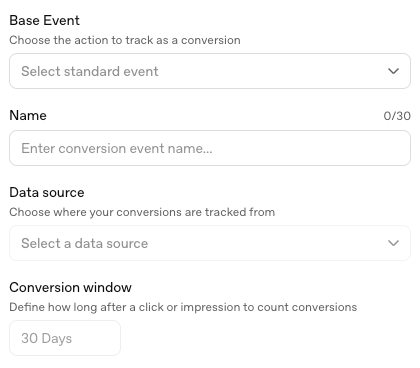
Standard conversion tracking can be implemented and measured. However, campaigns cannot currently be optimized directly toward conversion outcomes in the same way advertisers can on platforms such as Google or Meta.
As the ecosystem is still developing, available benchmarks remain limited. Early observations suggest:
CPC Range: ~$5 – $10
CTR Range: ~1% – 2%
These figures should be treated as directional rather than definitive benchmarks given the limited scale and maturity of the platform.
Audience targeting is currently based on advertiser-provided business information and ideal customer profile descriptions. The platform then uses this information to determine where ads are most relevant.
At present, advertisers do not have access to the detailed audience controls commonly available on other platforms.
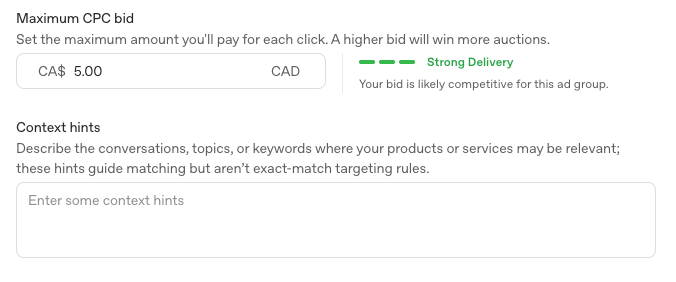
One of the biggest current limitations is visibility into where ads are appearing.
Advertisers currently do not have access to:
As a result, optimization opportunities remain more limited than on established advertising channels.
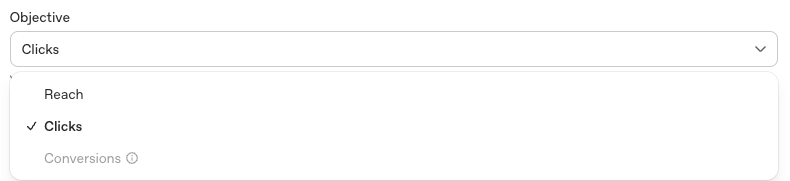
While conversion tracking is available, advertisers cannot yet optimize campaigns toward specific conversion goals or bidding objectives. Optimization is largely focused on engagement-based performance metrics.
While conversion tracking is available, advertisers cannot yet optimize campaigns toward specific conversion goals or bidding objectives. Optimization is largely focused on engagement-based performance metrics.
ChatGPT advertising should currently be viewed as an emerging test-and-learn channel rather than a primary performance marketing platform.
The strongest use case today is for brands that:
As the platform evolves, we expect targeting, reporting, optimization, and measurement capabilities to become significantly more sophisticated.

